He hates rehearsed videos — so his Muse built him a clipping desk
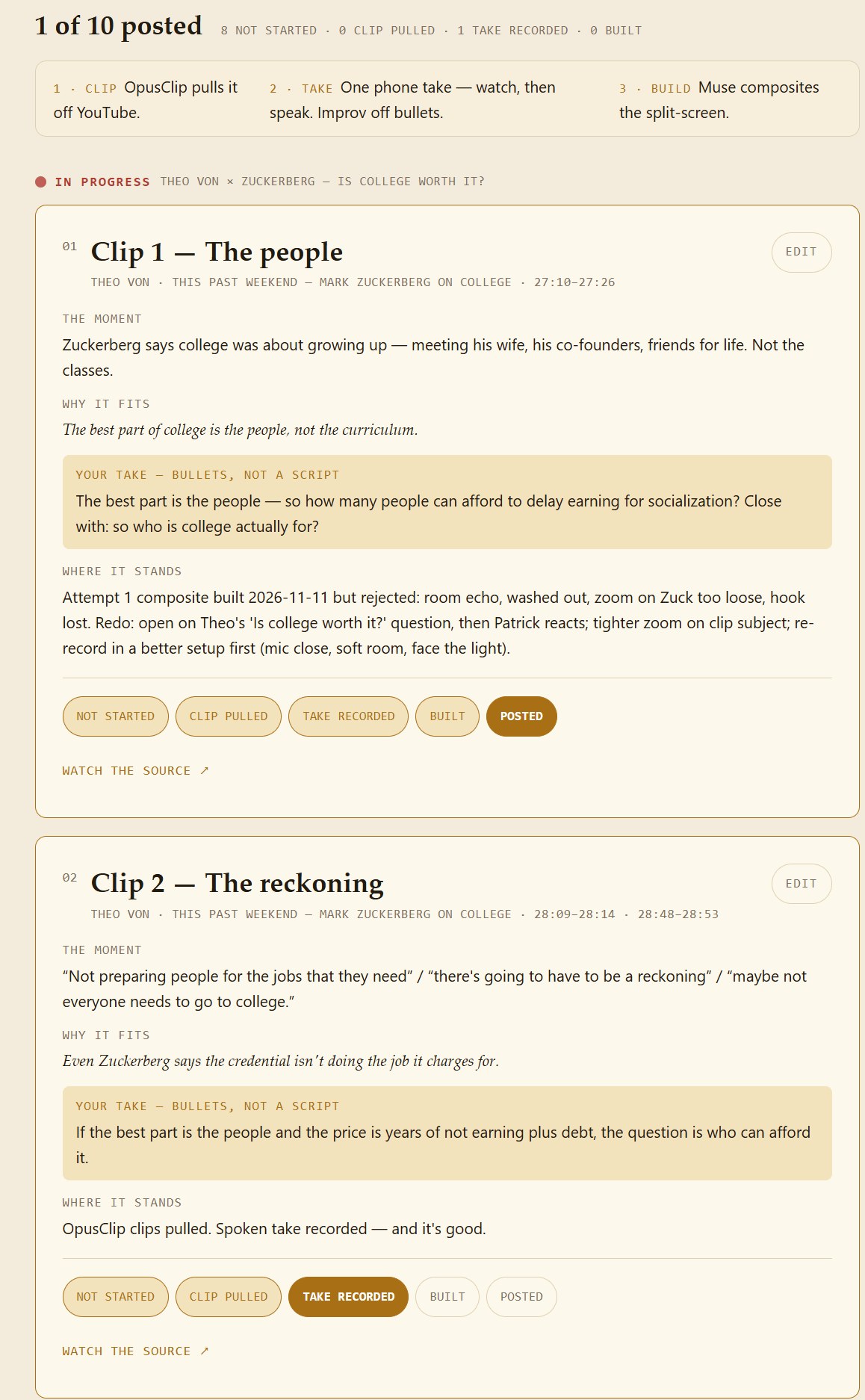
Dempsey writes about education and AI, and has recently started cross-posting on X, Facebook and elsewhere — and wants to make more video. The problem is that he is bad at filming rehearsed videos, so he switched to clipping: adding his own commentary over existing video. He put Muse on the mission: Muse knows all about him — it reads his email, LinkedIn, Substack and his growing social presence elsewhere. He gave it a few videos he had watched as a starting point, and Muse went out and found more material, pinpointed timestamps worth focusing on, and came up with response ideas. Then Muse built a Space for the project: a status board showing 1 of 10 videos published, 8 not started and 2 with takes recorded, and a production flow of OpusClip for cutting source clips, phone recordings for reactions, and Muse for assembly. In practice: Muse finds the material; OpusClip cuts the clips by timestamp; he records reactions on his phone; then he brings the clips back to Muse to assemble. He notes the process is still far more manual than it should be — once Muse is connected to OpusClip, there will be no more moving files around. He thinks of this kind of Space as an 'intention interface': an interface generated around whatever the user wants to get done right now.
Why it made the cut
He hates rehearsed video, so his Muse built him a clipping desk: a Space that tracks 10 videos and runs the clip-react-assemble flow.